MBA With Work Experience Requirements Unveiled
MBA With Work Experience Requirements sets the stage for this enthralling narrative, offering readers insight into how professional experience shapes the MBA journey. In today’s competitive market, pursuing an MBA isn’t just about academic excellence; it’s about merging that knowledge with real-world experience. With various programs available, understanding the core curriculum and the significance of work experience becomes crucial for prospective students aiming to elevate their careers.
This exploration delves into how work experience not only enriches learning but also aligns with the expectations of admissions committees. By examining typical requirements and the essential skills gained through professional roles, we uncover the vital role that real-world engagement plays in an MBA pursuit.
Understanding MBA Programs
Pursuing a Master of Business Administration (MBA) is a significant step for individuals aiming to advance their careers in the business world. An MBA equips professionals with a comprehensive understanding of business operations, strategic thinking, and leadership skills, making them invaluable assets in various industries. The degree not only enhances career opportunities but also often leads to increased earning potential and a robust professional network.MBA programs come in various formats, catering to different needs and lifestyles.
These include full-time, part-time, executive, and online programs. Each type serves distinct audiences, whether early-career professionals, mid-level managers, or executives looking to sharpen their skills without interrupting their careers. Understanding these options helps prospective students choose the path that aligns best with their professional and personal goals.
Types of MBA Programs
The landscape of MBA programs is diverse, with several formats designed to accommodate the varying schedules and career aspirations of students. Each type offers unique advantages and is structured to meet specific professional needs.
- Full-time MBA: This immersive option typically spans two years, allowing students to dive deeply into the curriculum and gain hands-on experience through internships or projects.
- Part-time MBA: Designed for working professionals, this format allows students to continue their jobs while studying, often offered during evenings or weekends.
- Executive MBA (EMBA): Tailored for senior professionals, this program often features a rigorous curriculum and networking opportunities, focusing on leadership and strategic management skills.
- Online MBA: Offers flexibility for distance learners, allowing them to access course materials and lectures remotely, making it easier to balance studies with work commitments.
MBA Curriculum Core Subjects
The core curriculum of an MBA program typically includes foundational business subjects that equip students with the essential knowledge and skills needed in the corporate world. This curriculum is designed to provide a holistic understanding of business operations and strategic decision-making.
- Accounting: Understanding financial statements, managerial accounting, and strategic cost management is crucial for making informed business decisions.
- Finance: Core concepts include capital markets, investment strategies, and financial analysis, which are vital for managing an organization’s financial health.
- Marketing: Covers principles of market research, consumer behavior, and brand management, essential for positioning products and services effectively.
- Operations Management: Focuses on production processes, supply chain management, and operational efficiency to improve organizational performance.
- Strategic Management: Equips students with tools to analyze competitive environments, develop strategic plans, and implement changes effectively.
- Leadership and Organizational Behavior: Explores dynamics within organizations and strategies for effective leadership and team management.
“An MBA not only builds theoretical knowledge but also enhances practical skills through case studies and collaborative projects.”
Importance of Work Experience
Work experience plays a pivotal role in the MBA journey, significantly enhancing the depth of learning and application of business concepts. While theoretical knowledge from textbooks is essential, it is the practical insights gained from real-world experiences that truly enrich the MBA curriculum. This blend of theory and practice prepares students to face complex business challenges head-on.The average MBA student brings around 5 to 7 years of work experience into their program.
This statistic underscores the trend of professionals seeking to bolster their credentials with an MBA after gaining substantial industry exposure. This experience is invaluable as it allows students to relate classroom theories to actual business scenarios, thereby fostering a deeper understanding of the material.
Benefits of Practical Experience in Business Education, MBA With Work Experience Requirements
Practical experience in the business world offers numerous advantages that enhance the MBA learning experience. These benefits include:
Improved Class Discussions
Students with work experience contribute valuable insights during discussions, drawing from their personal encounters in the workplace. This enriches the learning environment for everyone involved.
Real-World Application of Theories
Theoretical concepts learned in class are often abstract until they are applied in real-world settings. Work experience enables students to grasp these theories more readily by relating them to situations they have encountered in their careers.
Networking Opportunities
Professionals entering an MBA program usually come with a network of industry contacts. These connections can facilitate collaboration, mentorship, and job opportunities during and after the program.
Leadership Development
Many MBA programs emphasize leadership skills, and those with prior work experience typically have had opportunities to lead teams or projects. This background allows them to refine their leadership style and learn from their experiences.
Career Transition and Advancement
For many students, an MBA serves as a launchpad for career advancement or a shift into a new industry. Work experience provides clarity on career goals and helps in tailoring the MBA experience to meet these objectives.In summary, the integration of work experience into MBA education creates a dynamic learning environment that prepares graduates to excel in their careers, armed with practical knowledge and a robust professional network.
Work Experience Requirements for MBA Admissions

Source: educationforlearning.com
Many prospective MBA students often wonder about the importance of work experience in the admissions process. Work experience is a critical component that demonstrates a candidate’s professional maturity, leadership potential, and ability to contribute to a cohort of diverse peers. Most top-tier MBA programs require applicants to have a certain amount of relevant work experience before applying, as it enhances the overall learning environment and prepares students for the challenges of advanced business education.The typical work experience requirements for MBA programs generally range from two to five years.
This range varies among institutions based on their program structure and ethos. Some schools emphasize quality over quantity, valuing unique or leadership-oriented roles, while others might require a minimum number of years in a traditional corporate setting.
Comparison of Schools’ Criteria Regarding Professional Experience
Understanding the varying criteria set by different MBA programs is essential for applicants aiming to enhance their admission prospects. Below is a comparison of the work experience requirements from several well-known MBA programs:
- Harvard Business School: Prefers applicants to have at least 2-5 years of work experience, emphasizing leadership experience and impact within organizations.
- Stanford Graduate School of Business: Typically looks for 3-5 years of professional experience, valuing entrepreneurial and innovative roles.
- Wharton School of the University of Pennsylvania: Generally requires 3-5 years of work experience and favors candidates with experience in finance, consulting, or management roles.
- MIT Sloan School of Management: While there is no strict requirement, most admitted students have an average of 4-5 years of work experience, particularly in technology or engineering sectors.
- Columbia Business School: Encourages applicants to have 3-5 years of experience, with significant consideration given to leadership roles and career progression.
Understanding these criteria helps applicants tailor their experiences and narratives for each school. It’s not just about the number of years worked; the nature and relevance of the experience play a crucial role in shaping an application.
Valued Types of Work Experiences by Admissions Committees
Admissions committees typically seek candidates who have demonstrated leadership, strategic thinking, and a clear progression in their careers. Certain types of experiences are particularly valued:
- Leadership Roles: Positions where the candidate has led teams or projects showcase the ability to manage people and resources effectively.
- Entrepreneurial Ventures: Experience in starting or running a business reflects initiative, risk-taking, and innovative thinking.
- Global Exposure: Work experience in international settings indicates adaptability and a broad perspective, essential for global business dynamics.
- Consulting and Financial Analysis: Roles in consultancy firms or finance demonstrate analytical skills and the ability to solve complex business problems.
- Non-Profit Organizations: Experience in social enterprises can illustrate a commitment to societal impact and leadership in diverse environments.
Admissions committees often appreciate candidates who can articulate how their unique experiences will enrich classroom discussions and contribute to collaborative learning.
Application Process for MBA with Work Experience

Source: iulonline.in
Applying for an MBA program that requires work experience involves a structured process that can be pivotal in shaping your career. Understanding the application steps, necessary documentation, and how to present your work experience effectively can enhance your chances of admission to your desired program.The application process typically consists of several steps that prospective students must navigate to ensure their application stands out.
Each school may have specific requirements, but the general framework remains consistent across many institutions.
Steps to Apply for an MBA Program with Work Experience
The application process for an MBA program with a work experience requirement can be Artikeld in the following steps:
- Research Programs: Explore various MBA programs to find those that align with your career goals and have specific work experience requirements.
- Prepare for Standardized Tests: Depending on the program, you may need to take GMAT or GRE. Ensure to check the specific requirements of each program.
- Gather Required Documents: Compile all necessary documentation, including your resume, transcripts, and letters of recommendation.
- Write Personal Statements: Craft compelling essays that reflect your career journey, aspirations, and how the MBA aligns with your goals.
- Submit Your Application: Complete the application form, ensuring all sections are filled out accurately before submission.
- Prepare for Interviews: Some programs require an interview as part of the selection process, so practice articulating your experiences and motivations.
Checklist of Documents Needed for Application
Having a complete and organized application can significantly impact your candidacy. Here’s a checklist of documents typically required for applying to an MBA program with a work experience requirement:
Ensure that all documents are submitted by the application deadline to avoid any last-minute issues.
- Completed Application Form
- Resume/CV
- Transcripts from All Post-Secondary Institutions
- Standardized Test Scores (GMAT/GRE)
- Letters of Recommendation
- Personal Statement or Essays
- Application Fee Payment Confirmation
Crafting a Compelling Resume Highlighting Work Experience
Your resume serves as a critical document in the MBA application process, particularly when work experience is emphasized. It’s important to tailor your resume to effectively showcase your professional journey.When crafting your resume, consider the following tips to enhance its impact:
Your resume should not only list your job titles but also highlight your accomplishments and the skills you’ve developed through your work experience.
- Use a Clear Format: Ensure your resume is well-organized and easy to read, using consistent formatting throughout.
- Focus on Achievements: Quantify your achievements with concrete metrics, showcasing how you contributed to your previous employers.
- Highlight Relevant Experience: Tailor your work experience to align with the skills and competencies valued by MBA programs.
- Include Leadership Roles: Emphasize any leadership positions or projects that demonstrate your ability to lead teams and manage responsibilities.
- Keep it Concise: Aim for a one-page resume, ensuring that every word adds value to your application.
Balancing Work and MBA Studies
Pursuing an MBA while managing a full-time job presents unique challenges and opportunities for working professionals. Striking a balance between work responsibilities and academic commitments is essential for success in both areas. This section Artikels effective strategies for time management, the impact of program formats on work-life balance, and available resources to support MBA students who continue to work.
Strategies for Time Management
Effectively managing time is crucial for working professionals enrolled in MBA programs. Here are some strategies to help maintain balance:
- Prioritize Tasks: Identify urgent and important tasks both at work and in your studies. Creating a priority list can help you focus on what needs immediate attention and reduce stress.
- Set a Flexible Schedule: Establish a study timetable that accommodates your work hours. This flexibility allows you to dedicate specific times to coursework while being responsive to work demands.
- Utilize Technology: Leverage productivity tools and apps to keep track of deadlines, assignments, and meetings. Calendar apps and task management tools can help you stay organized.
- Establish Boundaries: Communicate with your employer about your MBA commitments. Setting clear boundaries helps manage expectations and minimizes conflicts between work and study time.
- Engage in Group Studies: Collaborating with classmates can enhance learning efficiency. Group studies not only provide support but also can be scheduled flexibly to accommodate everyone’s availability.
Impact of Program Formats on Work-Life Balance
Choosing between part-time and full-time MBA programs significantly affects work-life balance. Part-time MBA programs are often designed for working professionals, allowing them to continue their careers while studying. This format typically offers evening or weekend classes, providing flexibility. While this can ease the burden of managing both responsibilities, it may extend the duration of the program.Conversely, full-time MBA programs demand a greater time commitment, often requiring students to immerse themselves in academics and networking.
This can create intense pressure, as students may need to either take a break from work or find ways to manage both full-time studies and job responsibilities.Ultimately, the choice of program depends on individual goals and circumstances, emphasizing the importance of aligning personal and professional aspirations.
Resources for Working Professionals
Several resources exist to support MBA students who are also working professionals. These include:
- Online Learning Platforms: Many MBA programs offer online or hybrid courses that provide flexibility in scheduling and location, enabling students to study on their own time.
- Career Services: Universities often provide career counseling and job placement services, helping students navigate their career paths while pursuing their degree.
- Networking Opportunities: Joining professional organizations or alumni networks can foster connections that benefit both academic and career development.
- Mental Health Support: Access to counseling and wellness programs can help students manage stress and maintain a healthy work-life balance.
“The key to successfully balancing work and study lies in effective planning, time management, and utilizing available resources.”
Career Outcomes After MBA with Work Experience
Graduating with an MBA, especially when paired with relevant work experience, opens doors to a multitude of career advancement opportunities. The combination of theoretical knowledge from an MBA program and practical experience significantly enhances a graduate’s employability and readiness for leadership roles. Professionals with this dual advantage often find themselves in positions that require strategic thinking, managerial skills, and the ability to drive business growth.Industries across the spectrum recognize the value of MBA graduates with work experience.
These sectors not only appreciate the skills learned during the MBA but also the real-world insights gained through professional experiences. Graduates can expect to see substantial career advancements as they leverage their enhanced qualifications.
Industries Valuing MBA Graduates with Work Experience
The following sectors are particularly known for valuing candidates with an MBA combined with work experience:
- Consulting: Firms like McKinsey, Boston Consulting Group, and Bain & Company actively seek MBA graduates with prior work experience for their problem-solving acumen and strategic insights.
- Finance: Investment banks and financial service companies, such as Goldman Sachs and JPMorgan Chase, prefer candidates who can navigate complex financial landscapes with both academic and practical understanding.
- Technology: Companies like Google and Amazon often hire MBA graduates for management roles, looking for individuals who can blend technical knowledge with business strategy.
- Healthcare: Organizations in this sector value MBA graduates who can manage operations and strategy effectively, ensuring patient care is prioritized while maintaining financial viability.
- Manufacturing and Operations: Companies like General Electric and Procter & Gamble seek MBA graduates to lead initiatives that enhance efficiency and drive innovation in production processes.
Success stories abound of individuals who have successfully utilized their MBA and work experience to achieve significant career growth. These graduates often transition into leadership roles or start their ventures, capitalizing on their cumulative experience.
“An MBA not only broadened my theoretical foundation but also equipped me with the tools to navigate complex business challenges, making me a sought-after candidate in my industry.”
For instance, consider the case of Jane Doe, who transitioned from a project management role in a tech firm to a strategic position in a leading consulting company after completing her MBA. Her work experience allowed her to present real-world examples during interviews, illustrating her capability to tackle client challenges effectively. Another inspiring example is John Smith, who leveraged his MBA to pivot from finance to a leadership role in a nonprofit organization, using his business acumen to drive social impact initiatives.These narratives highlight that with the right combination of an MBA and work experience, graduates can not only climb the corporate ladder but also impact their organizations positively, proving the immense value of this educational path.
Networking Opportunities for MBA Students
Networking plays a pivotal role in the professional landscape, especially for MBA students looking to enhance their career prospects. Building connections with industry professionals, alumni, and peers can open doors to job opportunities, mentorship, and collaborations that can significantly impact a student’s career trajectory. An MBA program not only provides academic knowledge but also serves as a rich environment for cultivating meaningful professional relationships.
Work experience is a valuable asset that can greatly expand a student’s professional network. Individuals who have been in the workforce prior to pursuing their MBA often bring with them a wealth of contacts and relationships that can be leveraged throughout their studies. These connections can lead to vital networking opportunities, including introductions to influential figures in various industries, access to job openings before they are publicly advertised, and invitations to exclusive events.
Networking Events and Platforms for MBA Students
Participating in networking events and utilizing professional platforms are essential for MBA students to nurture and expand their networks. Engaging in these opportunities not only facilitates the building of relationships but also helps students stay informed about industry trends and job openings. Here are some key networking events and platforms that can benefit MBA students:
- Alumni Networking Events: Many universities organize events where current students can meet alumni, providing a platform for sharing experiences and advice, and possibly accessing job leads.
- Industry Conferences: Attending conferences relevant to one’s career interests can lead to valuable connections with professionals and thought leaders in the field.
- Networking Mixers: Informal gatherings specifically designed for professionals and students to mingle, exchange ideas, and build rapport.
- LinkedIn: This platform is essential for maintaining a professional online presence, connecting with industry leaders, and participating in relevant groups and discussions.
- Guest Speaker Events: Many MBA programs host guest speakers from various industries, offering students the chance to interact directly with leaders and gain insights into the industry.
- Professional Associations: Joining associations related to one’s field can provide access to exclusive networking events, resources, and job boards.
- Workshops and Seminars: Participating in skill-building workshops can introduce students to peers and professionals who share similar interests, fostering connections based on shared learning experiences.
“Networking is not just about who you know; it’s about who knows you.”
Financial Considerations of Pursuing an MBA: MBA With Work Experience Requirements

Source: vecteezy.com
Pursuing an MBA is a significant investment that extends beyond tuition fees; it also includes potential lost income, textbook costs, and other living expenses. Understanding these financial implications, especially when considering work experience, is essential for making an informed decision. An MBA can be a powerful tool for advancing your career and increasing your earning potential, but it’s crucial to balance these benefits against the financial commitments involved.One of the most pressing concerns for prospective MBA students is the cost associated with the program.
Tuition fees vary widely based on the institution, ranging from $20,000 to over $100,000 for top-tier programs. Additionally, students must account for costs such as textbooks, materials, and living expenses, which can add another $10,000 to $30,000 annually. However, the return on investment (ROI) can be significant for those with work experience.
ROI of Gaining Work Experience
Gaining work experience prior to pursuing an MBA can enhance your ROI in several ways. Here are the key points to consider when weighing the financial benefits of an MBA:
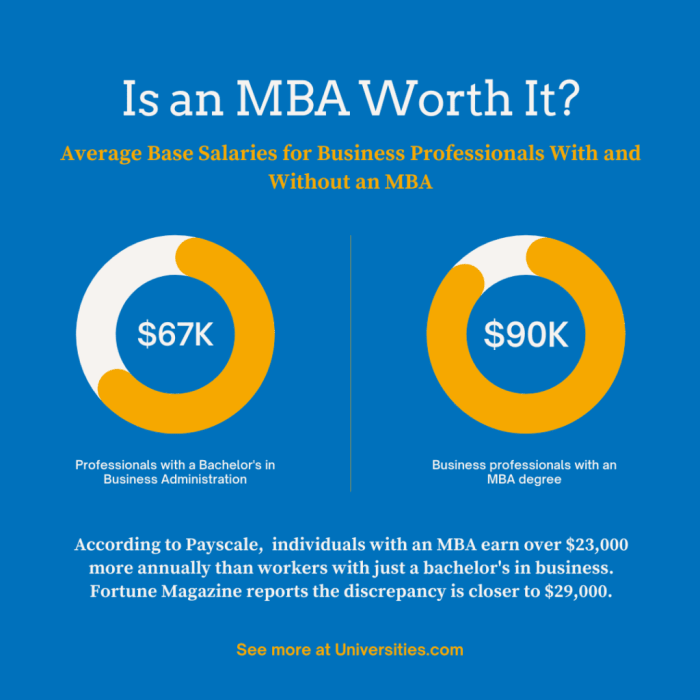
- Enhanced earning potential: Graduates with an MBA typically see increased salaries, often ranging from 50% to 100% more than their pre-MBA earnings.
- Career advancement opportunities: An MBA can lead to higher-level positions, which often come with significant salary increases.
- Stronger negotiation power: Professionals with work experience can leverage their background when negotiating salaries and benefits post-MBA.
- Networking benefits: Established professionals can expand their networks with industry leaders during their MBA, leading to better job opportunities and potential salary increases.
Funding Options for MBA Students with Work Experience
Several funding options can ease the financial burden of pursuing an MBA for students who are already in the workforce. Understanding these options can help students choose the most suitable financial path.
- Employer sponsorship: Many employers offer financial support for employees seeking advanced degrees as part of their professional development.
- Fellowships and scholarships: Numerous schools provide merit-based scholarships or fellowships specifically for experienced professionals.
- Student loans: Federal and private loans are available to cover tuition and related expenses, although it’s important to consider the long-term repayment implications.
- Part-time and online programs: These options allow students to work while studying, helping to mitigate lost income during their studies.
Salary Expectations Pre and Post-MBA
Before enrolling in an MBA program, it’s crucial to have a clear understanding of salary expectations. Here’s a comparison that highlights the financial trajectory for MBA graduates:
| Career Stage | Estimated Salary |
|---|---|
| Pre-MBA (3-5 years experience) | $60,000 – $80,000 |
| Post-MBA (entry-level management) | $90,000 – $120,000 |
| Mid-career (5-10 years post-MBA) | $120,000 – $200,000+ |
The figures illustrate a clear upward trajectory in salary potential for individuals who invest in an MBA, especially when complemented by relevant work experience. With strategic financial planning and a focus on ROI, pursuing an MBA can be a financially sound decision that pays dividends in the long run.
Final Thoughts
In conclusion, the journey through an MBA with work experience requirements is one that culminates in profound personal and professional growth. The integration of practical experience with academic learning fosters a unique skill set that enhances career prospects significantly. As graduates step into their future roles, armed with knowledge and experience, they are well-equipped to navigate the complexities of the business world and achieve lasting success.
Expert Answers
Why is work experience important for MBA candidates?
Work experience provides practical insights that enrich classroom learning and make students more competitive in the job market.
What types of work experience are most valued by MBA programs?
Experiences that demonstrate leadership, problem-solving, and teamwork are highly valued, especially in roles that show progression and responsibility.
How many years of work experience do I need for an MBA program?
Most programs prefer applicants to have at least two to five years of relevant work experience, though requirements can vary by institution.
Can I pursue an MBA without work experience?
While some programs accept candidates with limited or no work experience, most competitive programs place heavy emphasis on prior professional experience.
What is the average age of MBA students with work experience?
The average age of MBA students is typically around 27 to 32 years old, reflecting the common years of experience prior to enrollment.